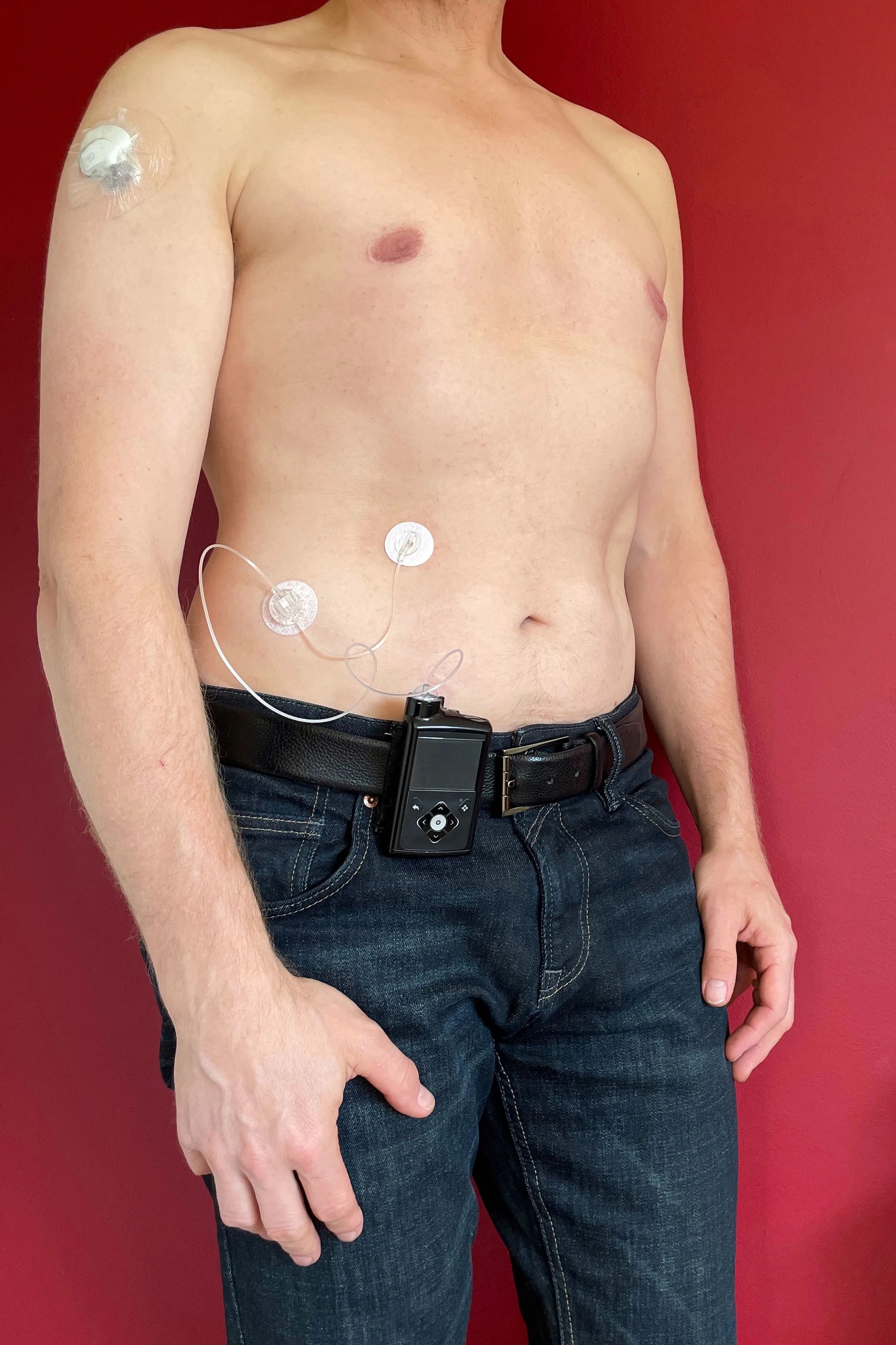
The stakes, worn openly: a machine trusted with a body’s chemistry, hour by hour, for years.
Medtd1, CC BY-SA 4.0, via Wikimedia CommonsThe Valve: engineering mercy for hydrocephalus
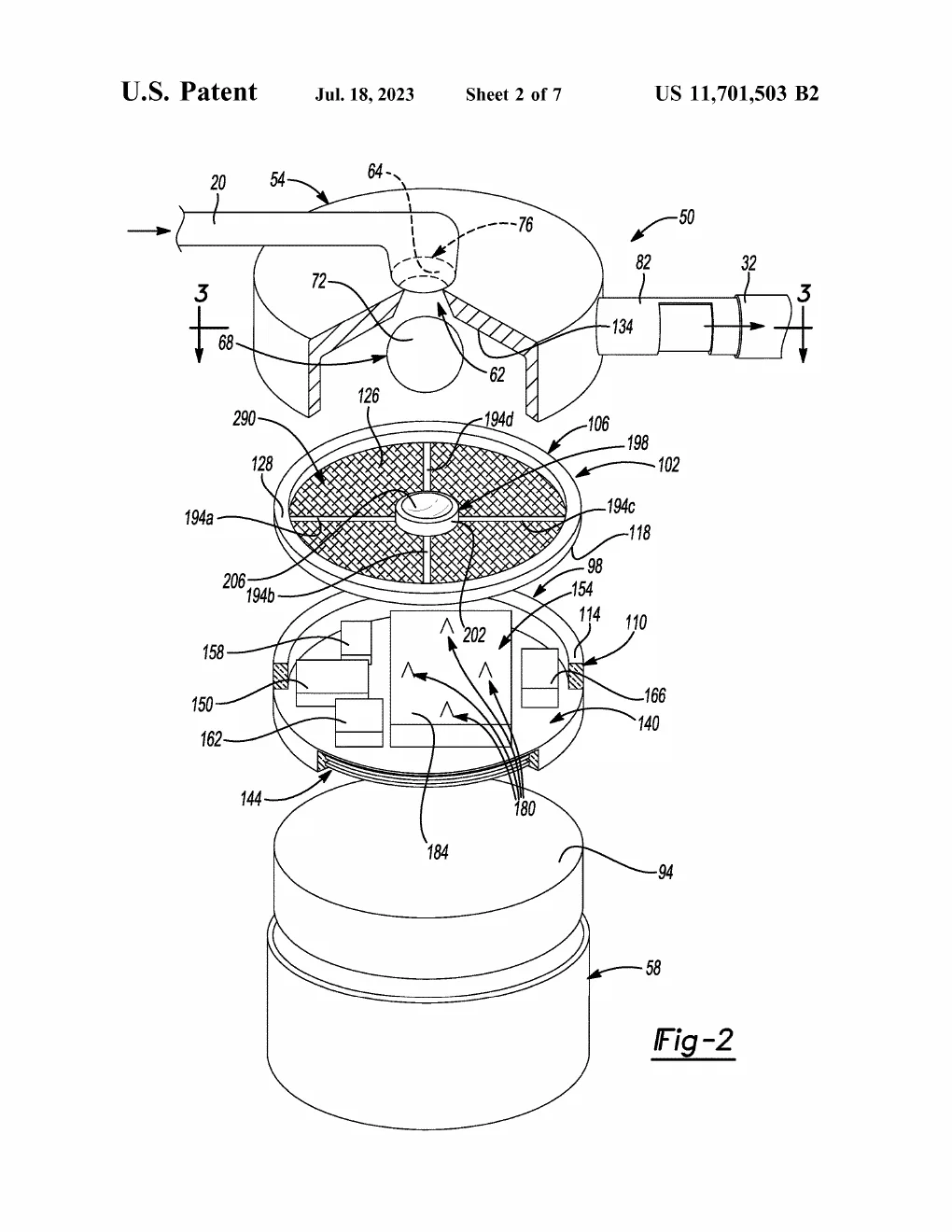
An exploded perspective view of the valve assembly pulled apart into its stack: the inlet connector and domed housing with its ball-and-cone valve seat on top, the cross-hatched flexible membrane disc beneath it, the plate carrying the MEMS actuators and electronics below that, and the fluid reservoir base at the bottom.
United States Patent and Trademark Office · public domainThe human stakesT2 · external source
Hydrocephalus — cerebrospinal fluid accumulating in the brain — is managed by a shunt: a tube draining excess fluid, governed by a valve. The clinical record is sobering: a large adult cohort study reports shunt failure rates ran as high as 32% (US, 1990–2009), with first-year revision rates around 17–21% in national registries (UK/Ireland 17.4%, Norway 20.7%), and long-term shunt survival far from assured — one comparative series saw only 81% of shunts still working at one year (PMC retrospective cohort, PMC comparative study, accessed 2026-07-22; figures corrected after adversarial QA). Each failure can mean another brain surgery.
Honest framingT2 · external source
Most failures are obstruction or infection rather than the valve mechanism — but valves are not blameless: in one pediatric series, first-generation programmable valves showed an ~11%-per-year intrinsic malfunction rate (9 of 35 revisions in the programmable group were the valve itself), where comparable non-programmable valves showed none (PubMed). So valve technology is one lever among several — and programmability's core promise is real: adjusting drainage pressure transcutaneously instead of by revision surgery.
The inventionT1 · from the patentUS11701503B2
The line (Medtronic PS Medical, the hydrocephalus division) claims a flow control assembly governed as a system: a flow-regulating shunt whose valve is driven by a MEMS (micro-electro-mechanical) actuator, controlled "according to selected parameters and methods" — pressure regulation as a control loop rather than a fixed spring setting. Two grants (2023, 2024) plus a continuing 2024 application mark an active line.
Plain-English registerT3 · interpretationconfidence: high
Old valves are like a fixed door-closer: one stiffness, chosen at surgery. This is a door with a tiny motorized hinge and a thermostat's brain — it can be told, from outside the body, exactly how hard to resist.
Pressure bows a diaphragm toward a fixed plate; the shrinking gap raises the capacitance. The valve reads the brain’s pressure as femtofarads.
An original instrument of the atelierWhy it belongs in the flagship setT3 · interpretationconfidence: medium
It shows the corpus's range: the same engineer whose name anchors nanometer bonds and radiation sponges also works where the engineering meets its most vulnerable patients. And it demonstrates the packaging thesis applied — a MEMS actuator can only live in CSF because the sealing craft exists. Inference, clearly labeled: we have no public evidence tying these patents to a shipped valve product; what's documented is the clinical need and the claimed mechanism.
Set-piece note (for Presentation)T3 · interpretation
Quietest set-piece on the site, deliberately: a slow pressure trace across the screen — rising toward a red band — then the MEMS valve opens a hair's width, the trace settles back to green. No spectacle. Just a system, keeping a child out of the operating room. Let the restraint carry the emotion.
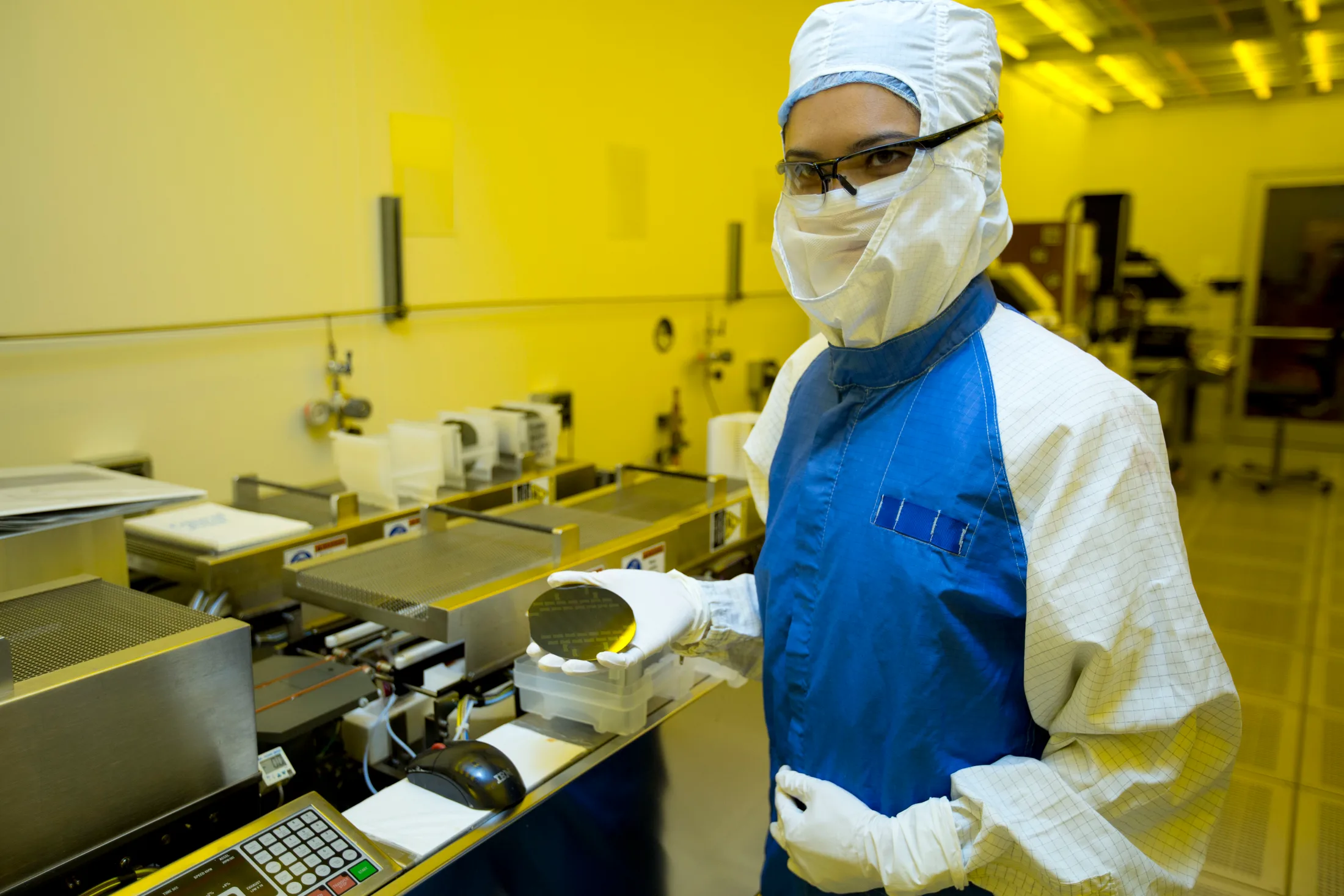
Yellow lithography light, a bunny suit, a finished wafer — micromachines like the valve begin in rooms built to be cleaner than the body they will enter.
Photo: U.S. Department of Energy / Lawrence Livermore National Laboratory, public domainSupporting Plates
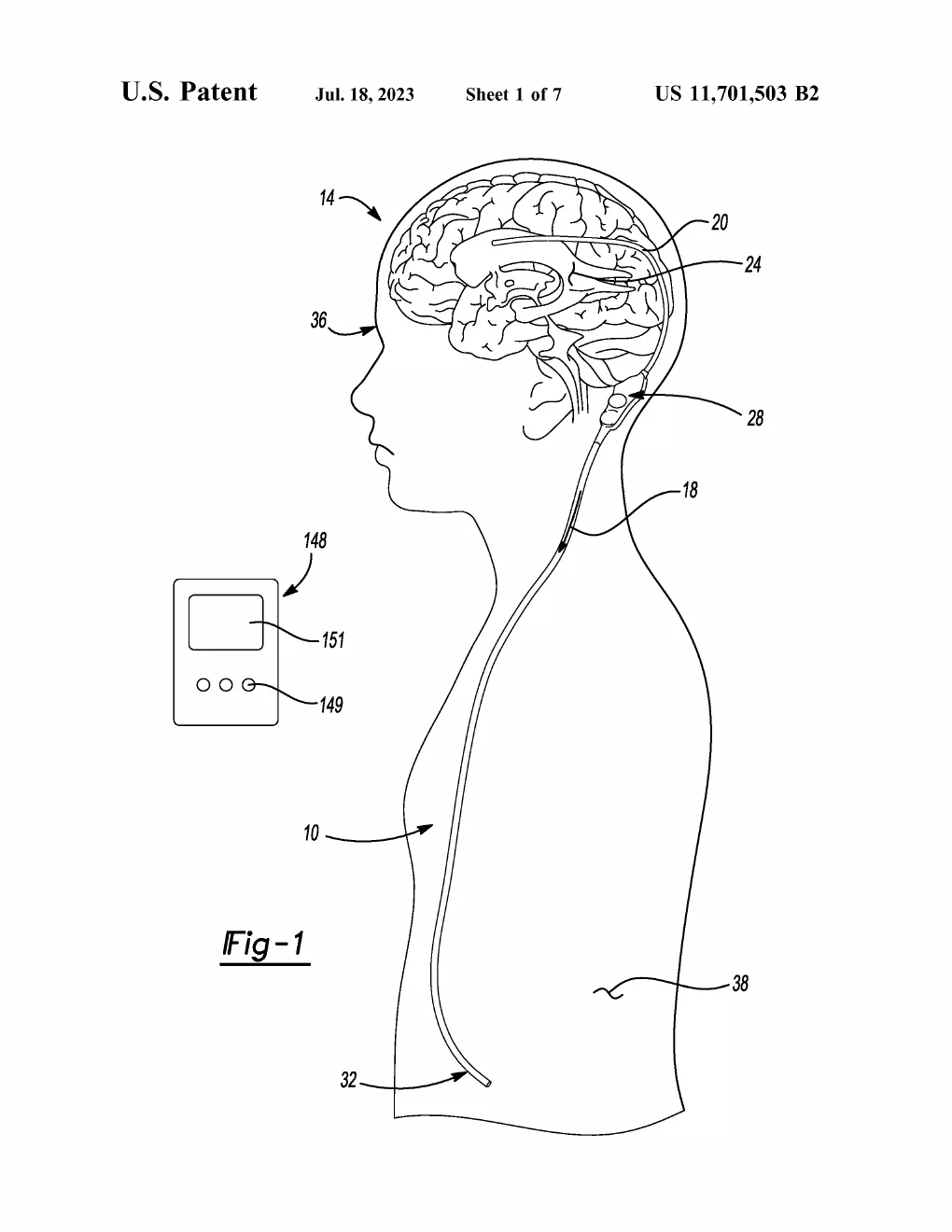
A side-profile outline of a patient with the full shunt system implanted — a catheter reaching into the brain's fluid space, the valve assembly seated behind the ear, and the drain tube running down inside the torso — with the handheld external programmer drawn alongside.
United States Patent and Trademark Office · public domain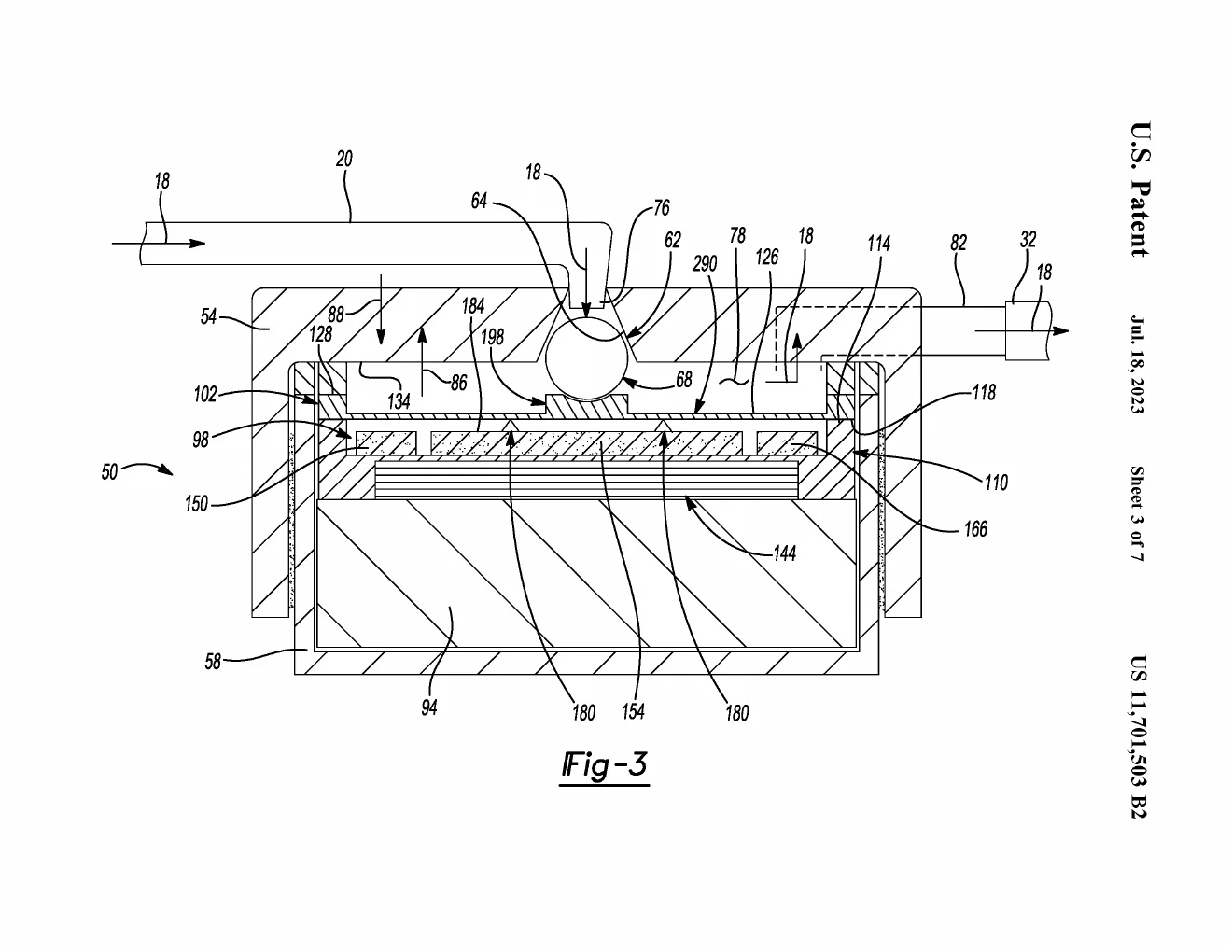
A cutaway cross-section through the assembled valve showing how the layers nest — the ball pressing into its seat, the membrane spanning the chamber, the actuator stack sandwiched underneath, and the fluid path threading in one port and out the other.
United States Patent and Trademark Office · public domain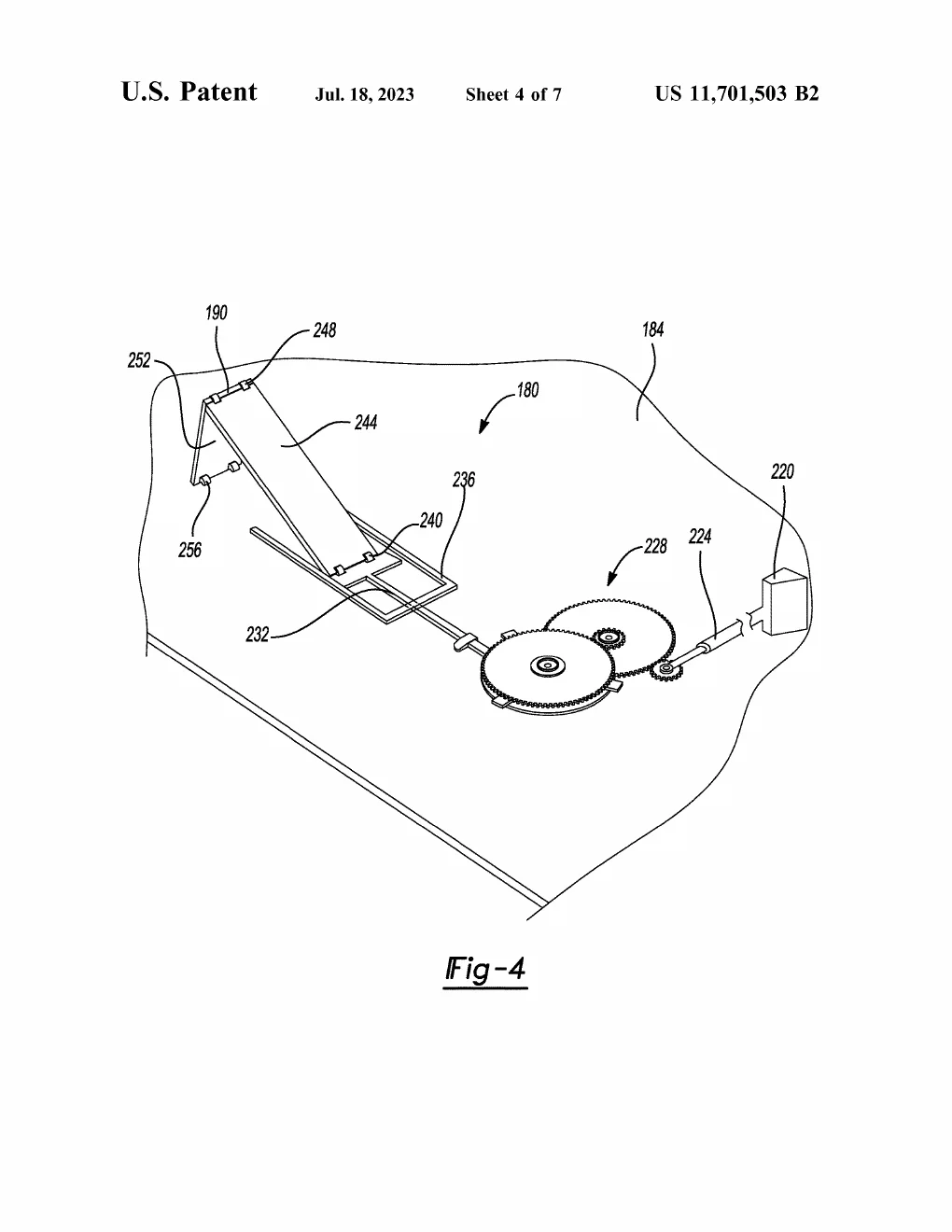
A close-up perspective of a single MEMS actuator mechanism: a tiny motor block driving a two-gear train that pulls a slider and tilts a hinged plate — the micro-machine that physically nudges the valve.
United States Patent and Trademark Office · public domain