The principleT1 · from the patentUS5535097A
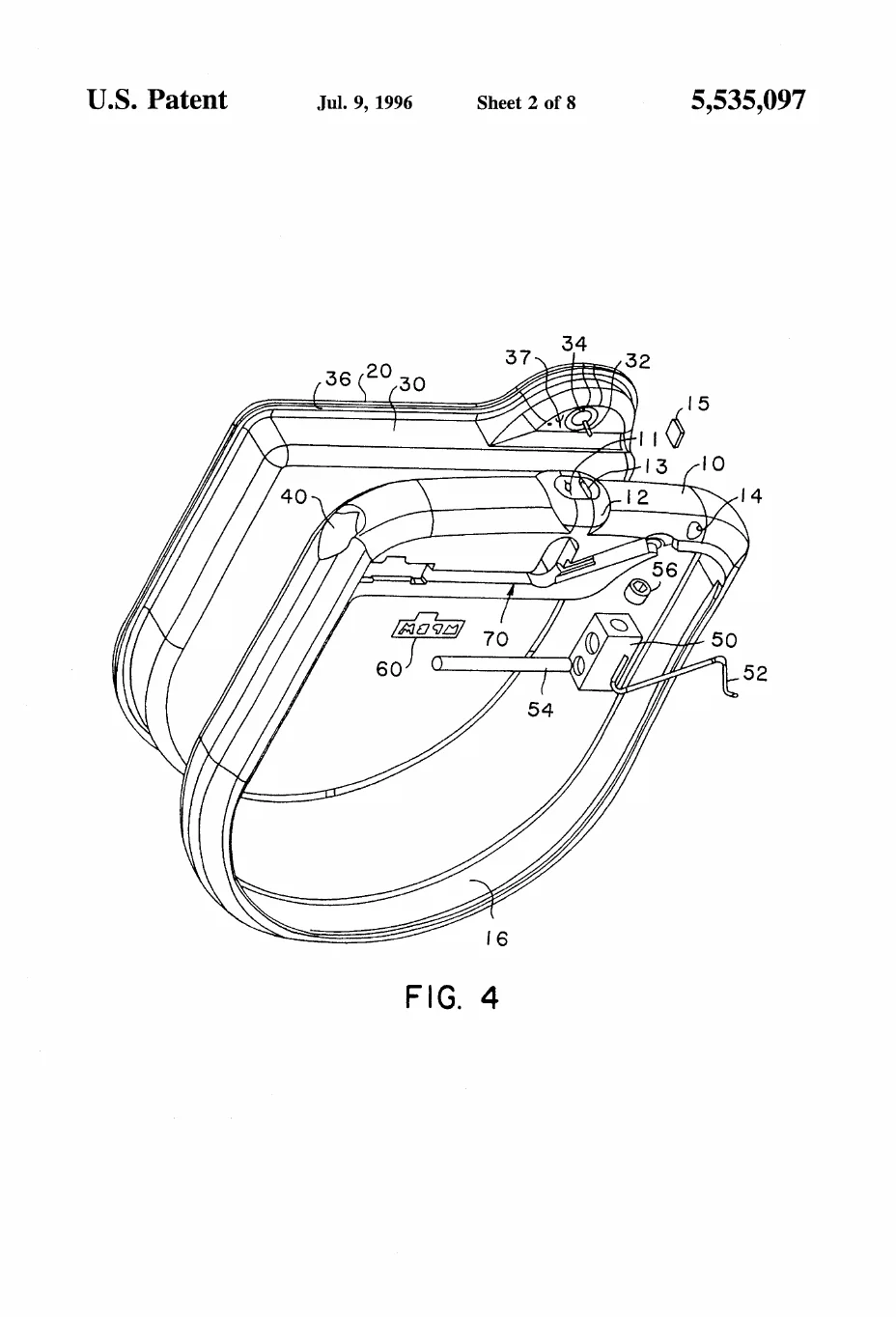
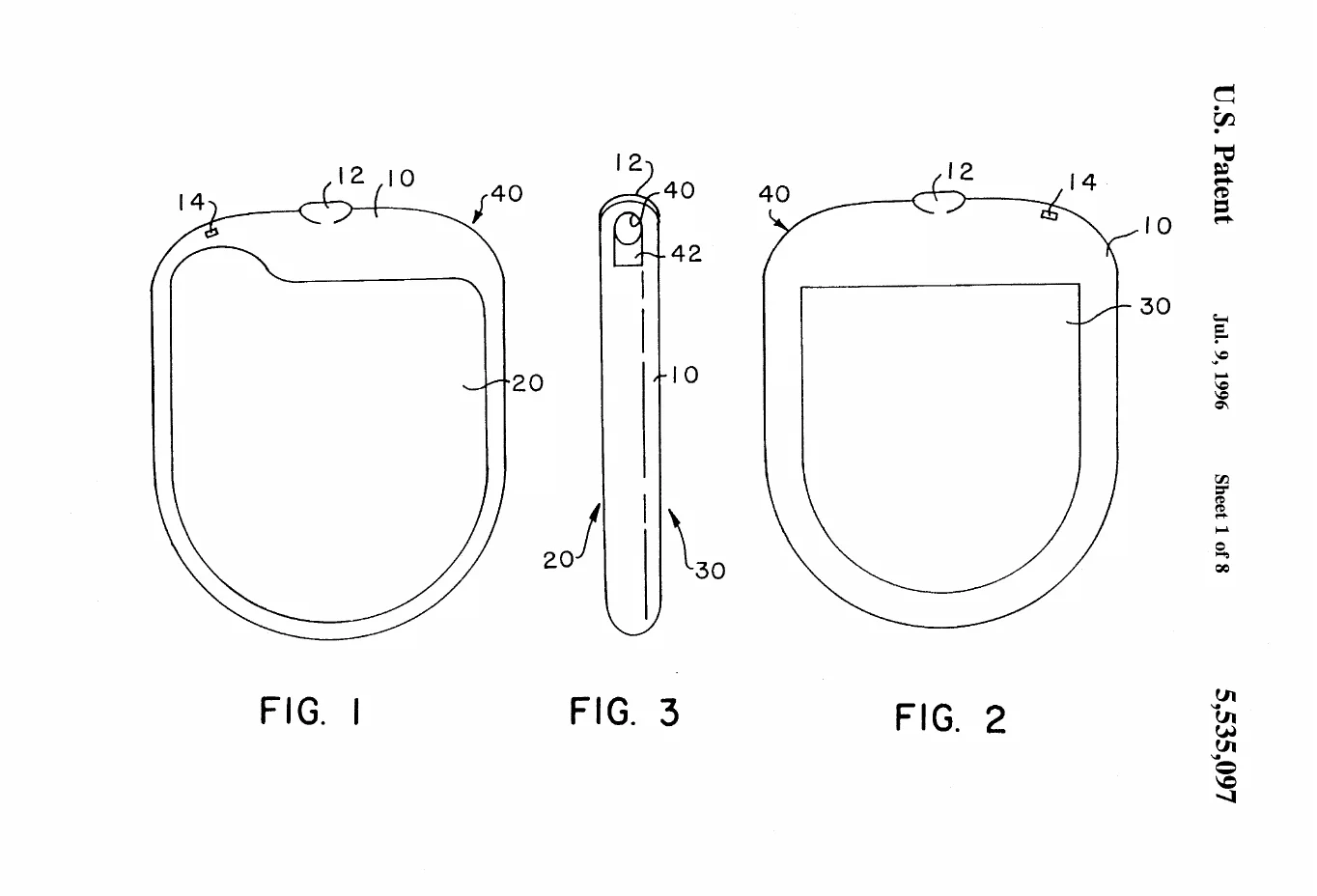
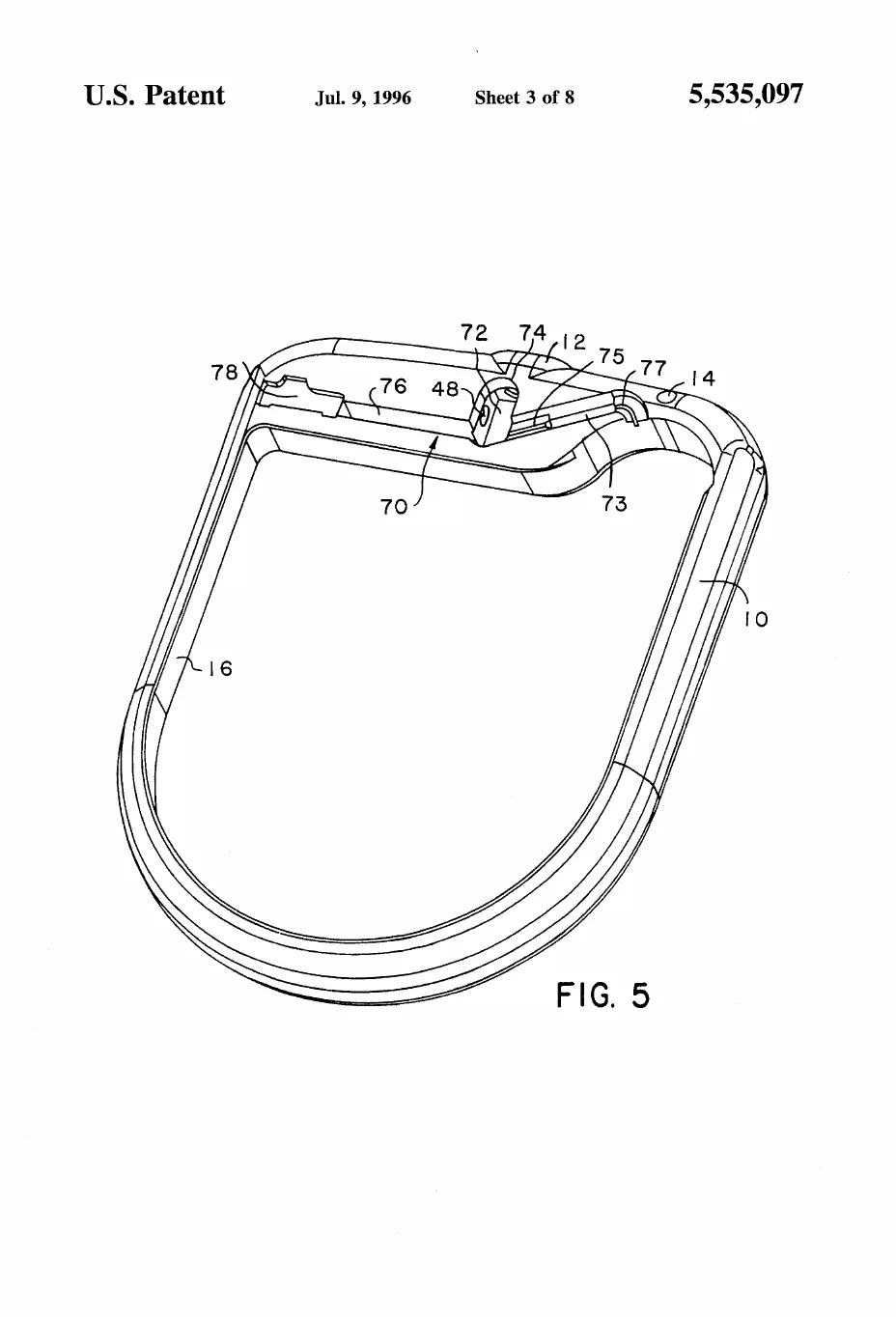
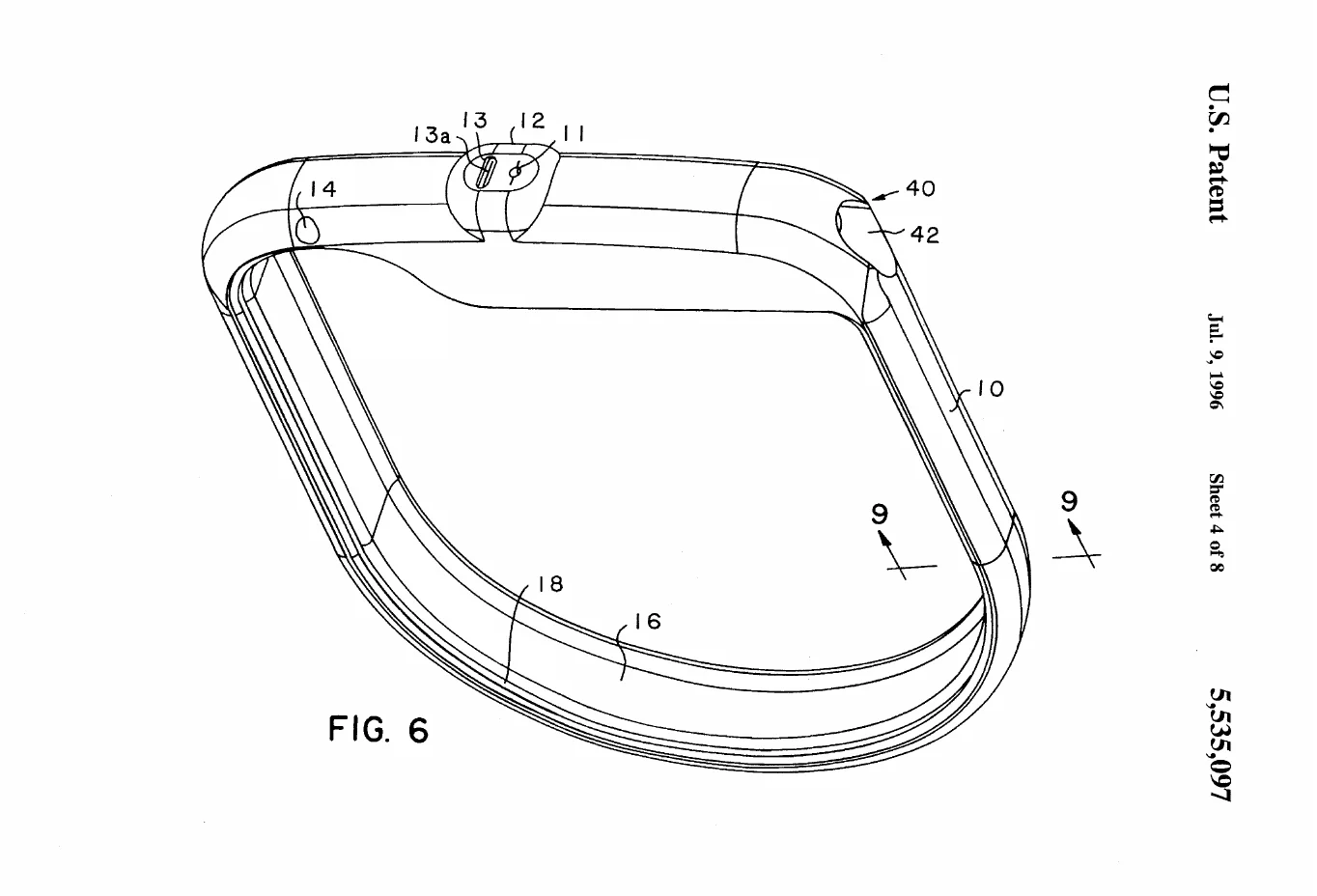
Redesign the enclosure so the parts locate themselves. Claim 1: a first
enclosure portion with a planar lower interior surface and a stepped second
interior surface; battery and circuit mounted adhesively; connections made by
wire bonding (chip-industry technique, not hand-soldered wires); the
feedthrough passing through the stepped surface; a second portion completing
the hermetic seal. (The molded resilient shroud forming the connector module is
the abstract's summary — in the claims it is claim 3's connector module "mounted
to said circumferential edge surface.") Claimed result: "fewer components and
fewer manufacturing steps," lower cost, and a "smooth, rounded contour" kinder
to the tissue pocket it lives in.
Plain-English registerT3 · interpretationconfidence: high
Instead of building a box and then engineering trays to hold everything, shape
the box's interior so each part has one obvious seat — then close the lid once.
Fewer pieces, fewer welds, fewer ways to fail.
Measured influenceT1 · from the patentUS5535097A
Google Patents lists 100 citing patents — among the most-cited work in the
corpus (only the accelerometer line's members rank higher) — meaning a hundred
later inventions found this design foundational enough to cite as prior art.
Why it matters to the storyT3 · interpretationconfidence: high
Every theme of the next three decades is already present in this one 1993
filing: hermeticity as the prime constraint, manufacturability as a design
input, borrowing microelectronics techniques into medical devices, and volume
efficiency as mercy on the patient. The corpus doesn't wander — it deepens.
This is the seed.
Set-piece note (for Presentation)T3 · interpretation
The natural opener for the whole site: the 1993 patent's line drawing of the
housing assembling itself piece by piece — battery seating into its step,
bond-wires arcing, lid closing — then the finished can slowly morphs through
the decades into the miniaturized modern forms. Career in one shot.