The problemT1 · from the patentUS5885471A
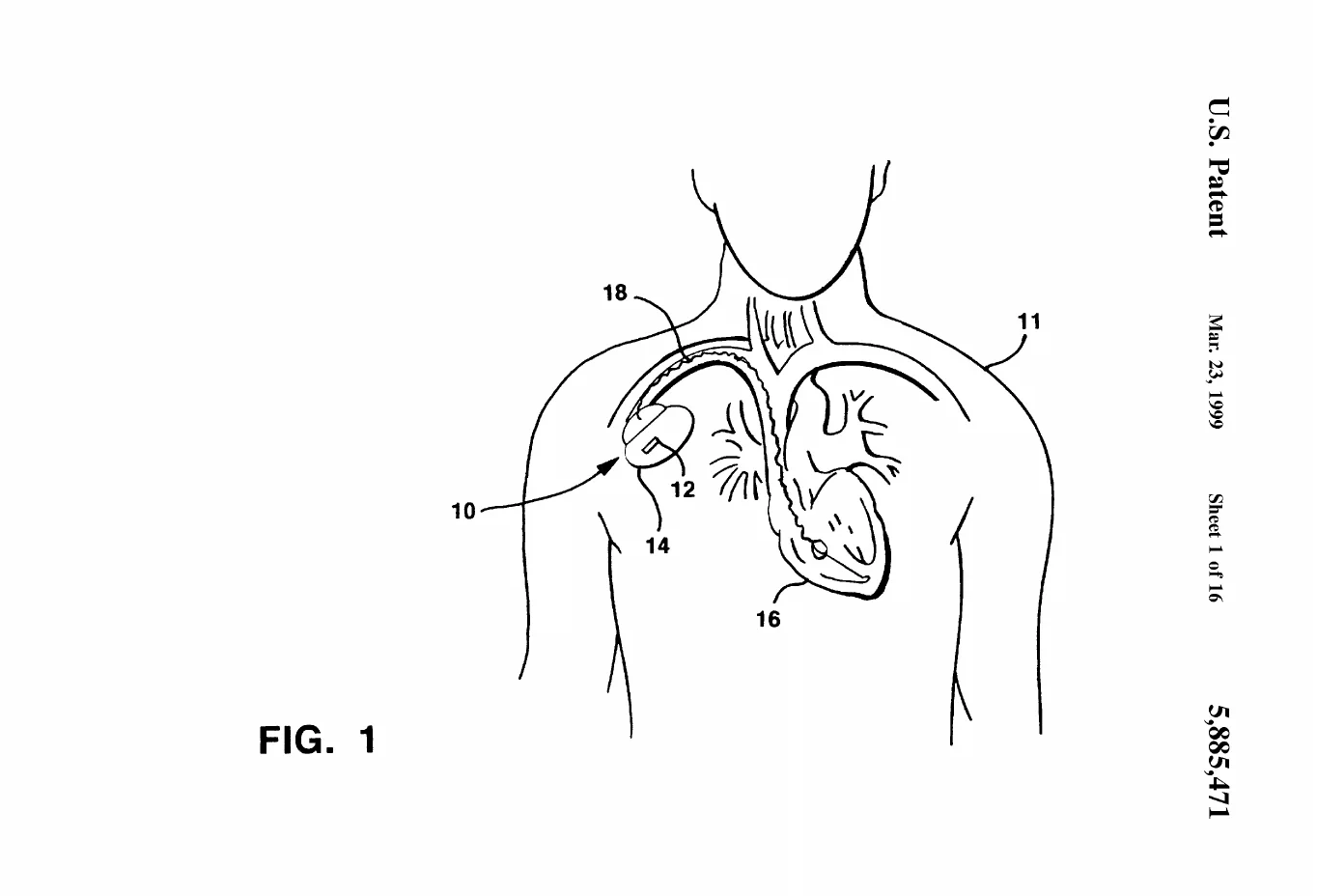
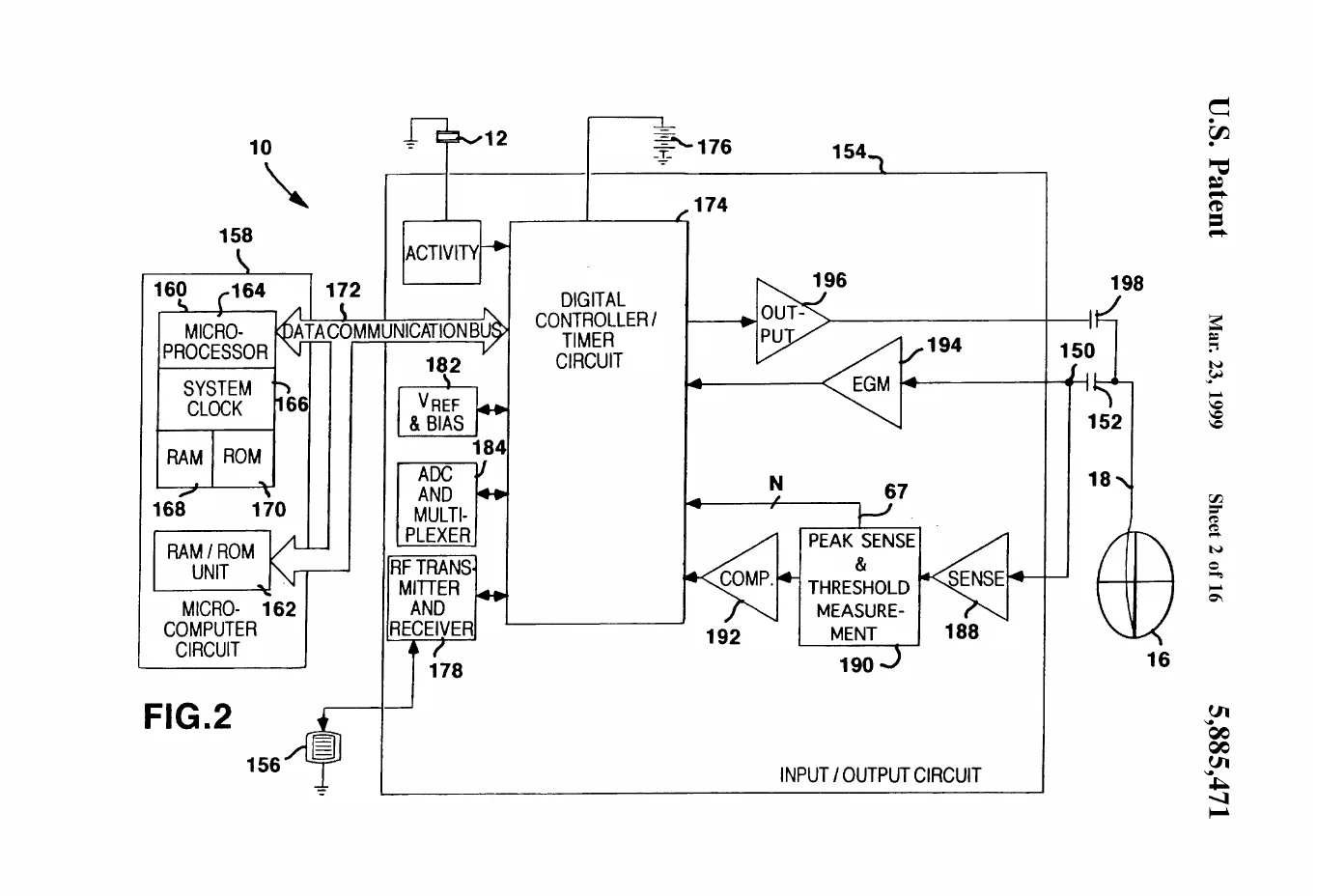
A rate-responsive pacemaker needs to know when its patient is active so it can raise the heart rate to match. The sensor of choice was a piezoelectric cantilever beam — a tiny diving board that generates voltage as it flexes with body motion. The trouble, per US5885471's background: prior-art beams were so fragile that dropping the device from a few feet could snap them, and the solder/epoxy bonding methods of the day caused yield losses and inconsistent output. A sensor destined to be sealed inside a human chest for a decade cannot be that delicate.
The principleT1 · from the patentUS5885471A
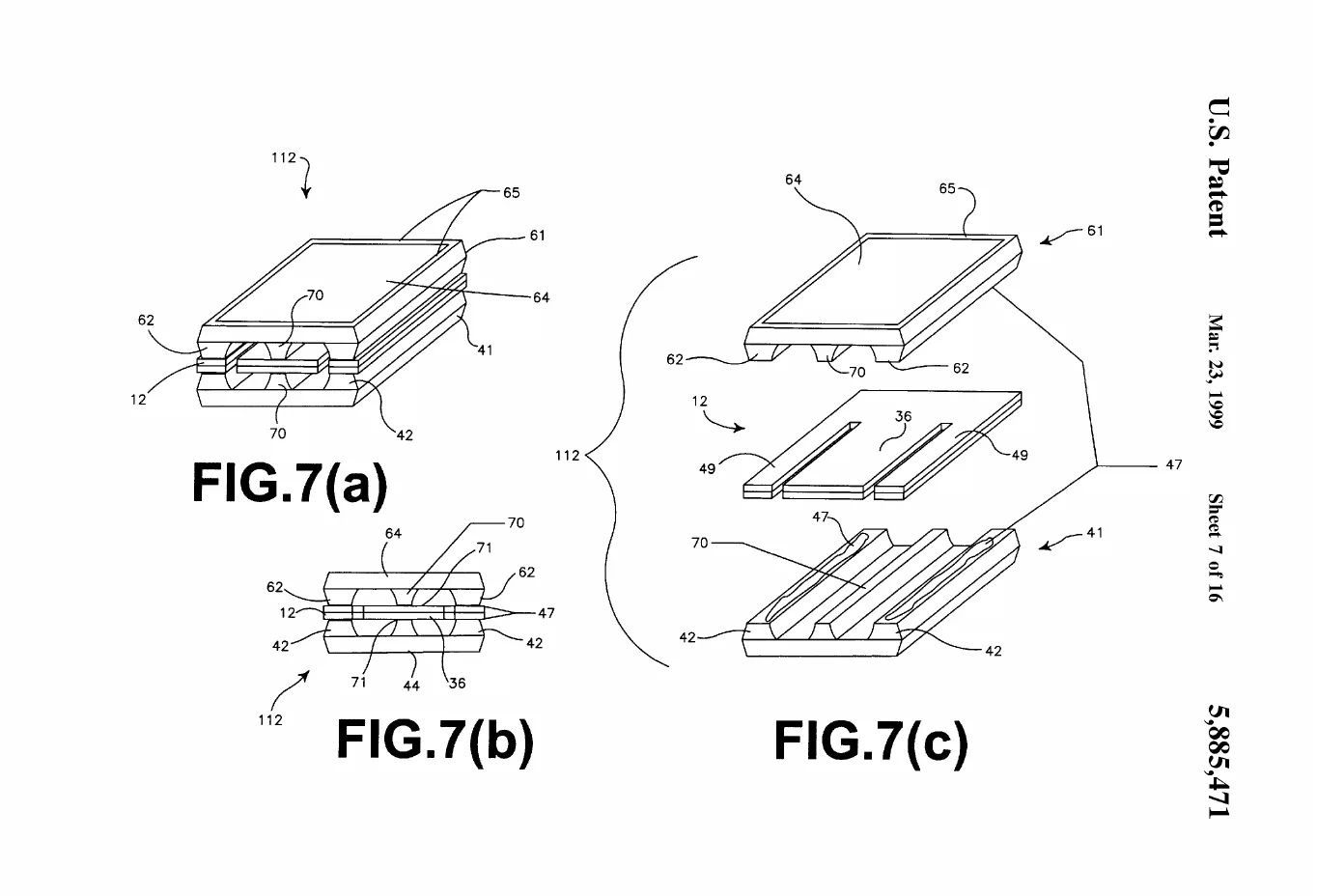
Piezoelectricity + mechanical over-travel protection. A piezoelectric sheet converts beam deflection (acceleration) directly into charge — no power needed to sense. The inventive step in US5885471 (D. Ruben, first-listed inventor) is claim 1's stop: a structure placed just above/below the beam's free end that lets it flex through its normal sensing range but arrests it before the deflection that would fracture it. Embodiments include a central rail stop (FIGS. 7a-c), foam-tape stops (FIGS. 11a-c), and damping gel (FIGS. 16a-c) — mechanical airbags for a sensor the size of a grain of rice.
Plain-English registerT3 · interpretationconfidence: high
Think of a diving board over a pool: flex is the signal. This invention adds a hand a half-inch under the board — invisible to a normal dive, but it catches the board before a cannonball snaps it.