The Sealed Machine · a vision in six heats
The Forge
The making of impossible things. Fifty-six United States patents, 1993–2026 — David A. Ruben, Medtronic Bakken Fellow, and thirty-three years of one discipline: put the heat exactly where the joint is, and nowhere else.
61 grants 6 lines of work 33 years of filings 203 citations on the most-cited
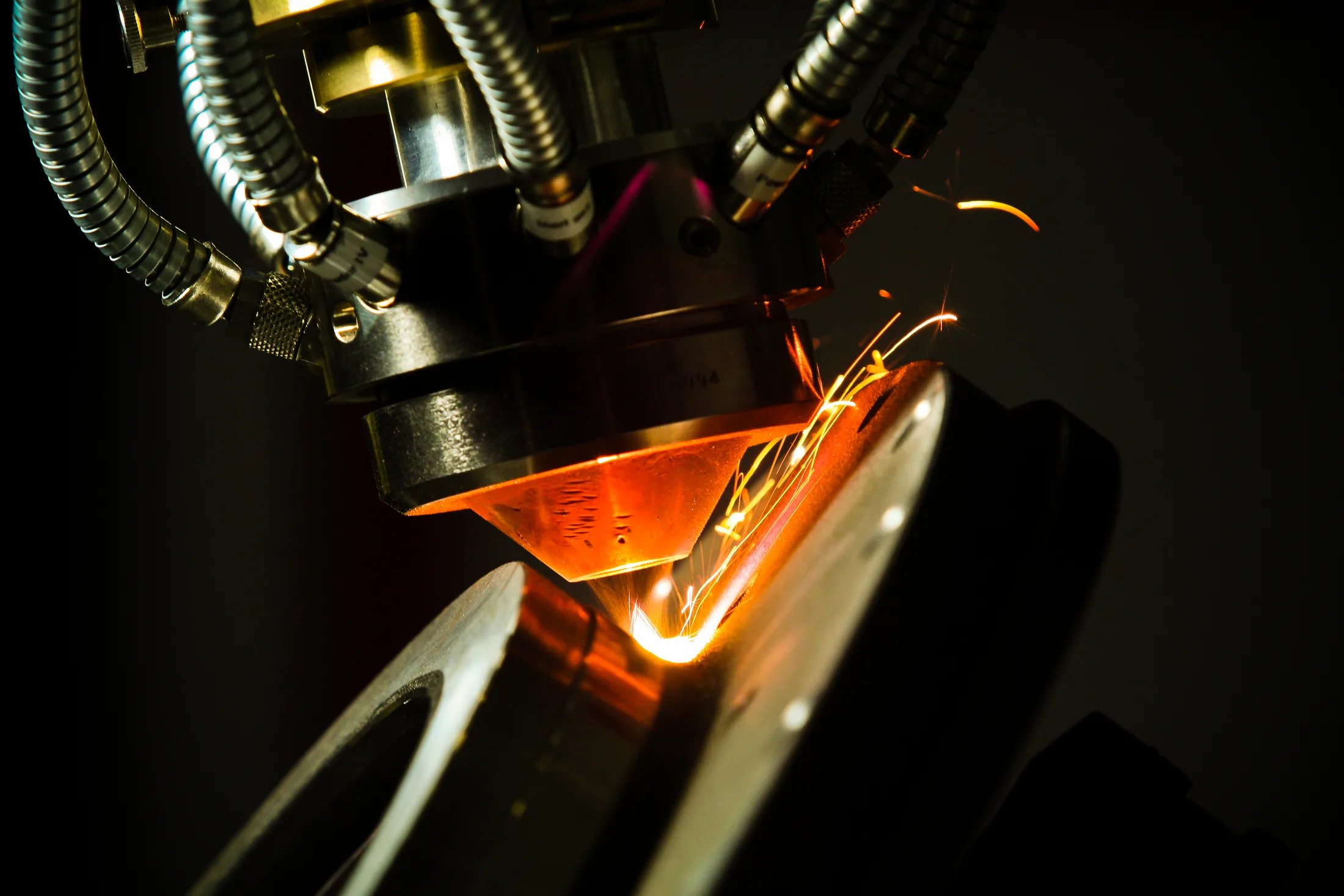
Laser cladding head at work — Photo: LaserTherm, via Wikimedia Commons, CC BY-SA 4.0
Every invention here exists twice
Once as ink — a numbered figure in a government document, hatched and captioned, arguing its claim in the driest language ever devised. And once as fire — a pulse of light freezing into a bond a hundredth of a hair thick, a titanium lid welding shut over a decade of someone’s heartbeats.
This vision pins the two against each other. The patent plates are presented as what they secretly are: schematics of fire — inverted, glowing, lit by the process they describe. Beside them, photographs of the real acts: the weld seam under a macro lens, the melt pool throwing sparks, the capsule glowing in a living ribcage. Where the drawing meets the thing, the corpus stops being paperwork and becomes what it always was — a body of work about making machines that must not fail, sealed by light.
Fifty-six grants, six lines of work, one maker’s name on every one. Below: the pairing that states the case, the arc it served, and the six heats — deep dives into the flagship lines, each with its drawings, its photographs, and its physics animated.
The seam, stated twice
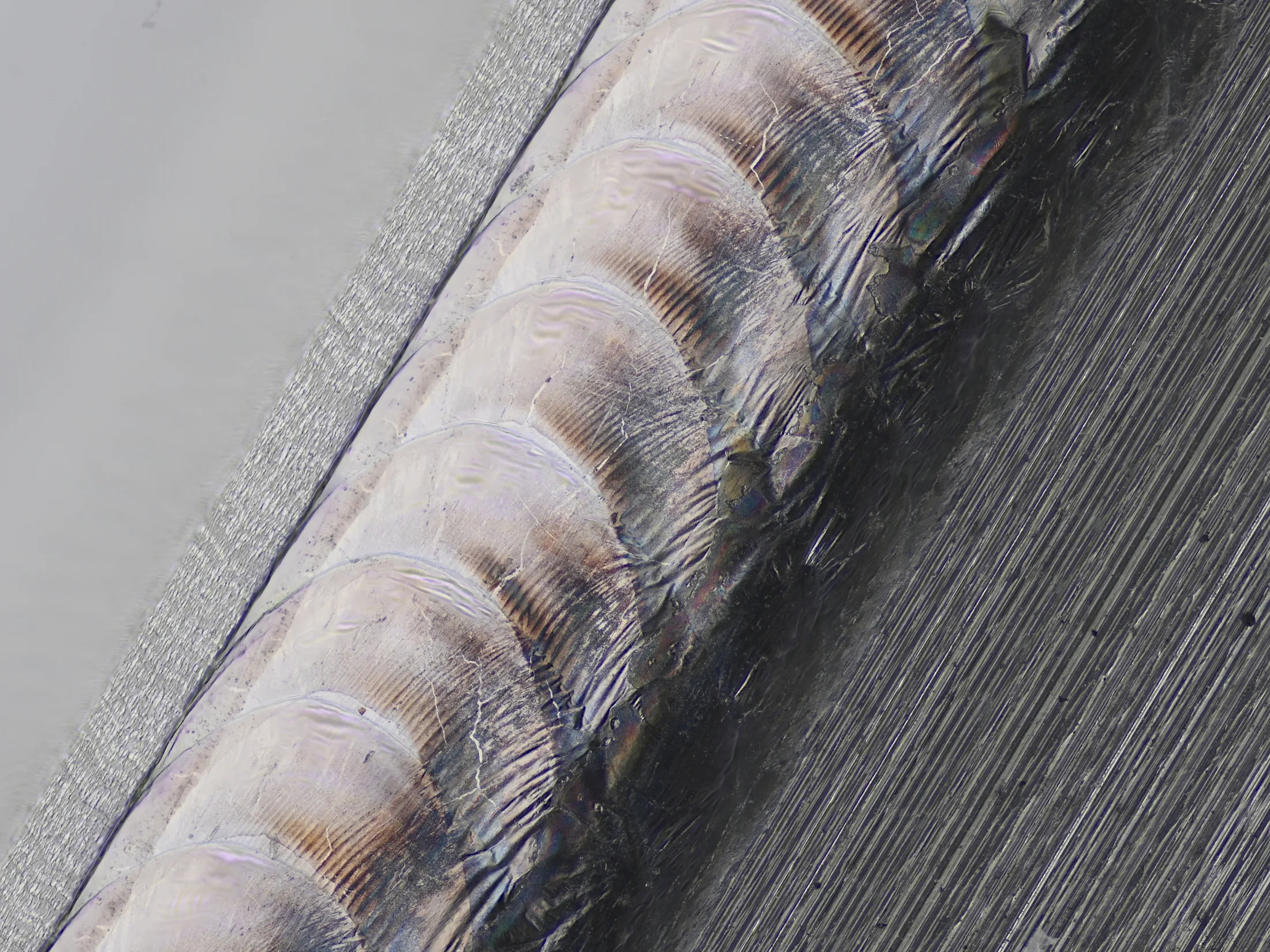
An overlapping pulsed laser weld seam, hermetically sealing a helium-filled enclosure — the exact artifact this corpus is about, under a focus-stacked macro lens.
Photo: Phiarc, via Wikimedia Commons, CC BY-SA 4.0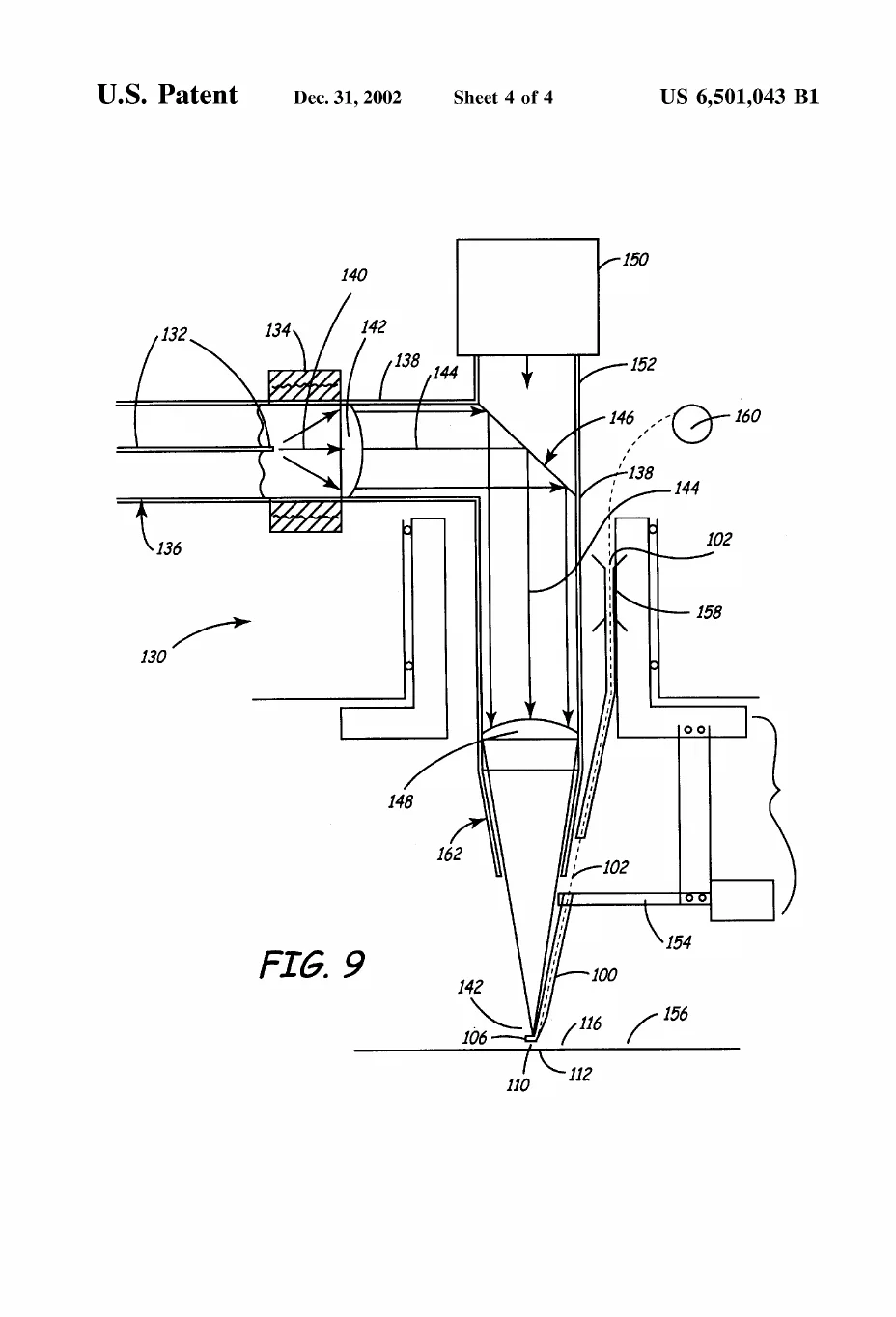
US 6,501,043 · FIG. 9 — A full cross-sectional schematic of the welding apparatus, tracing the laser beam from its source through a turning mirror and focusing lens down a conical housing and out through the bond head's aperture onto the ribbon-and-pad joint.
United States patent drawing, public domain. Sole inventor: David A. Ruben.Left: the act. Right: the argument for the act — the founding laser-bond patent of the craft line, sole-invented in 2000, the beam fired through the eye of the bonding tool itself. Every deep dive below repeats this pairing: the plate beside the photograph, the claim beside the fire.
1961 → 1993 → the vanishing machine
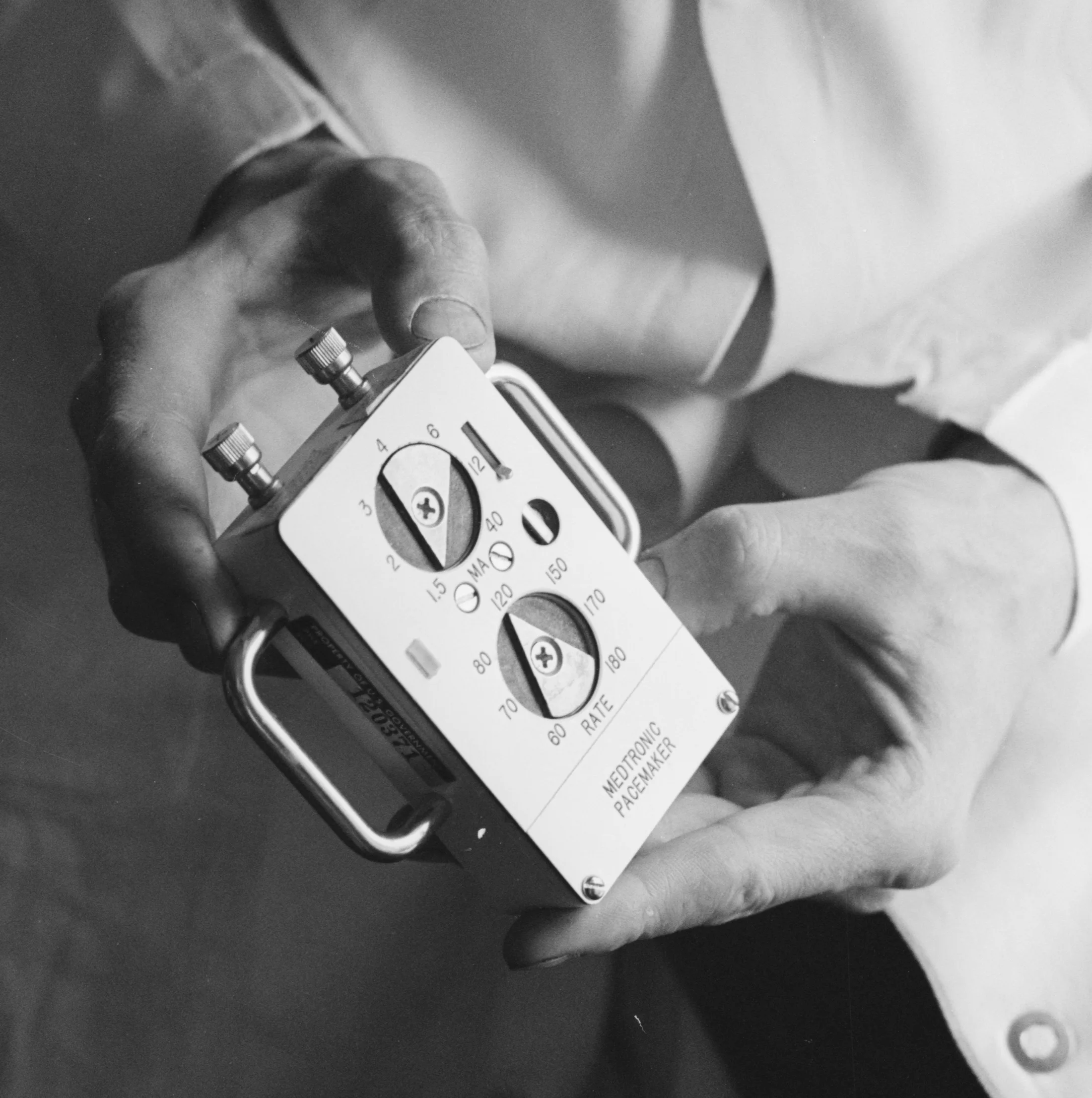
1961 — era zero. Hands on a boxy external MEDTRONIC PACEMAKER: the lineage every patent here descends from, back when the machine lived outside the body.
Warren K. Leffler, U.S. News & World Report Magazine Photograph Collection, Library of Congress — public domain, via Wikimedia Commons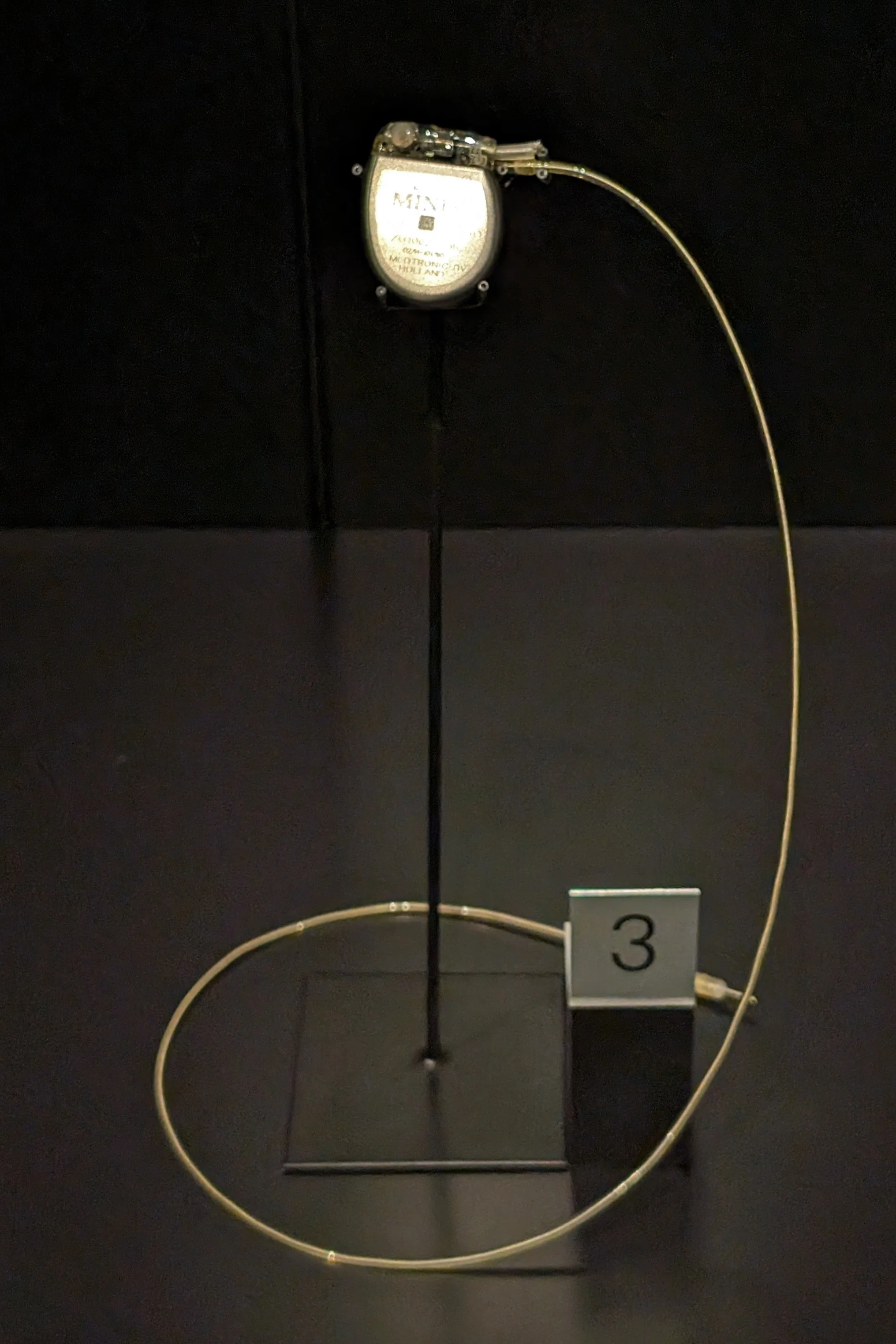
1993 — the first filing year. A Medtronic Micro-Minix in the Science Museum, London: a sealed titanium palm-stone from exactly the years the first housing patent was written.
The wub, CC BY-SA 4.0, via Wikimedia Commons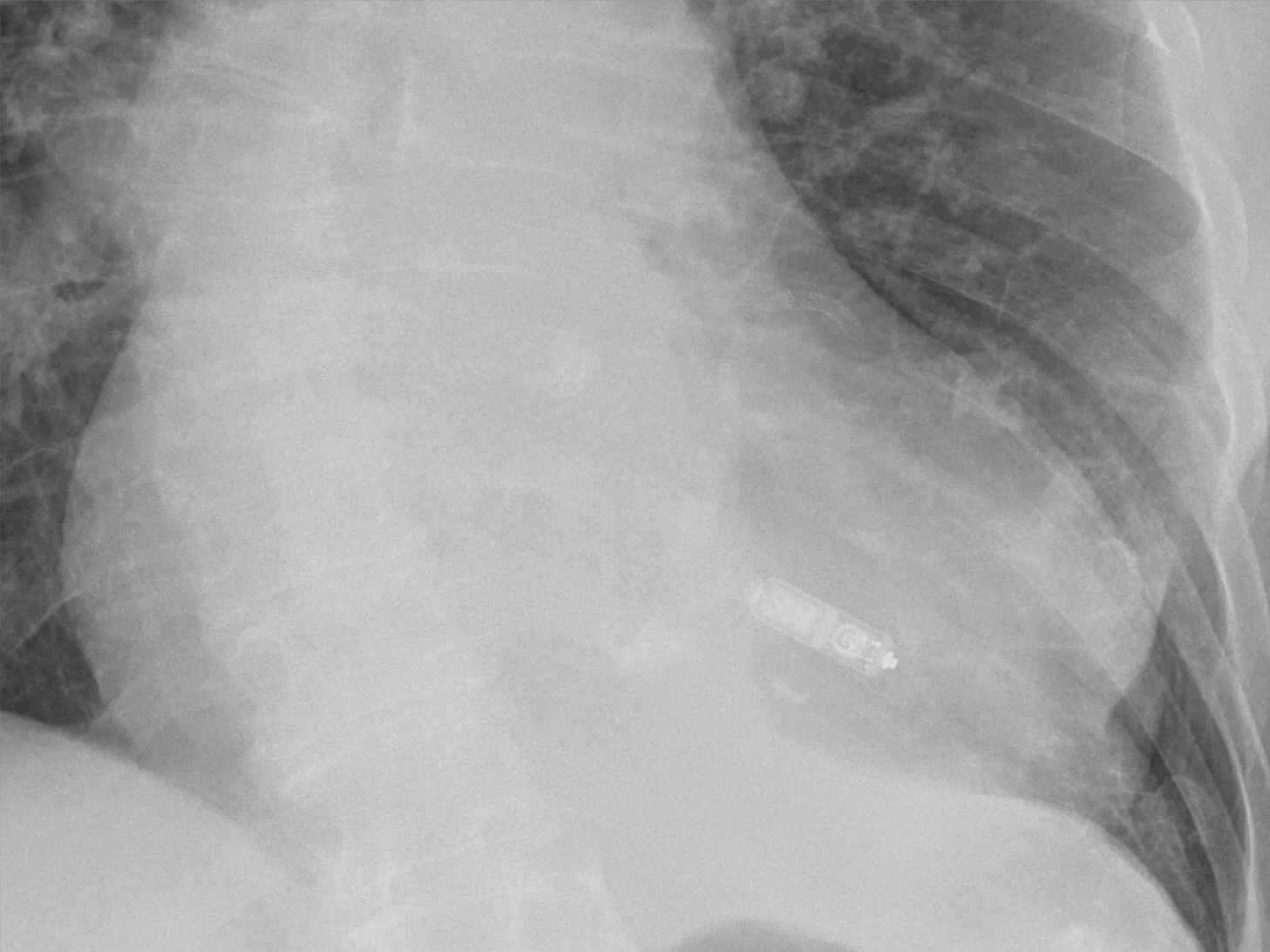
The endpoint. A Micra leadless capsule glowing in a 95-year-old’s ribcage — the miniaturized descendant of thirty years of packaging, feedthrough, and laser-joining craft.
Hellerhoff, CC BY-SA 4.0, via Wikimedia CommonsSix heats
Six flagship lines, taken in the order their fires were lit. Each chapter weaves the patent plates, the photographic record, and an animated set-piece of the physics at work.
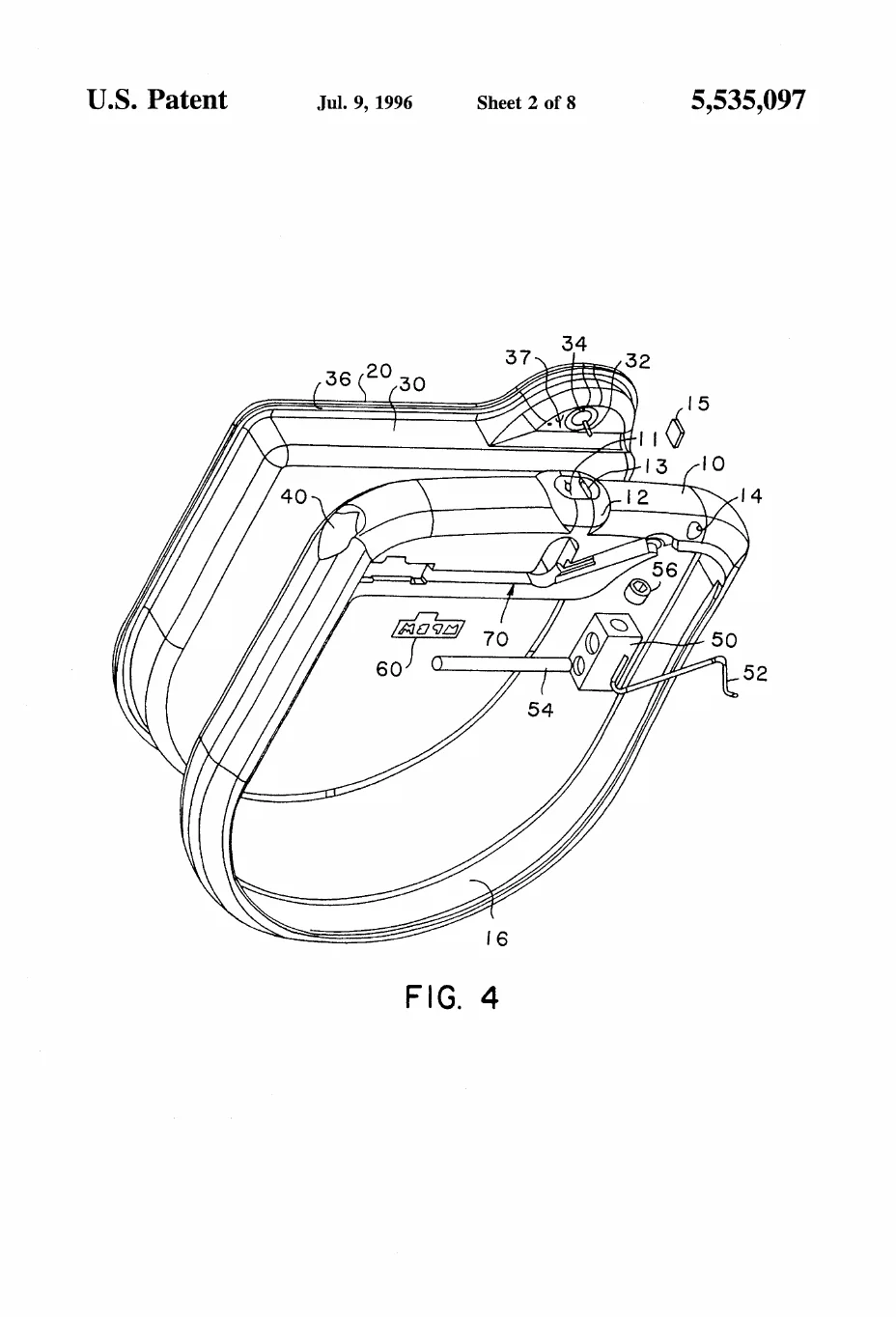
1993: The First Housing
The 1993 origin: a pacemaker shell whose parts locate themselves — assembled like a microchip, then welded shut.
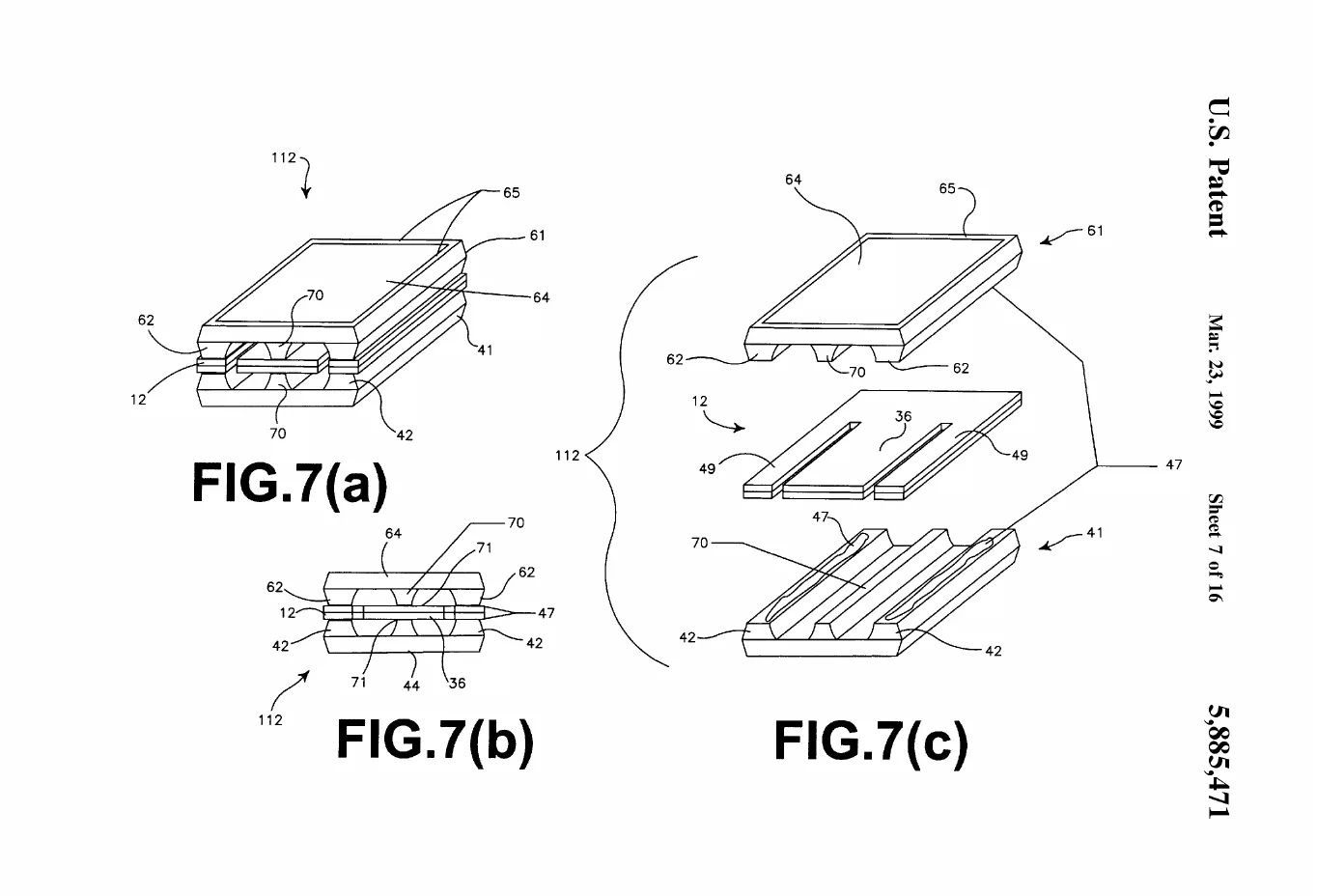
The Accelerometer Line: teaching the pacemaker to feel motion
A piezoelectric diving board that feels every heartbeat of motion — and the stop that catches it before it snaps.
The Laser Craft: light as a precision tool
Twenty-five years of the same trick at ever-smaller scale: heat exactly where the joint is, and nowhere else.
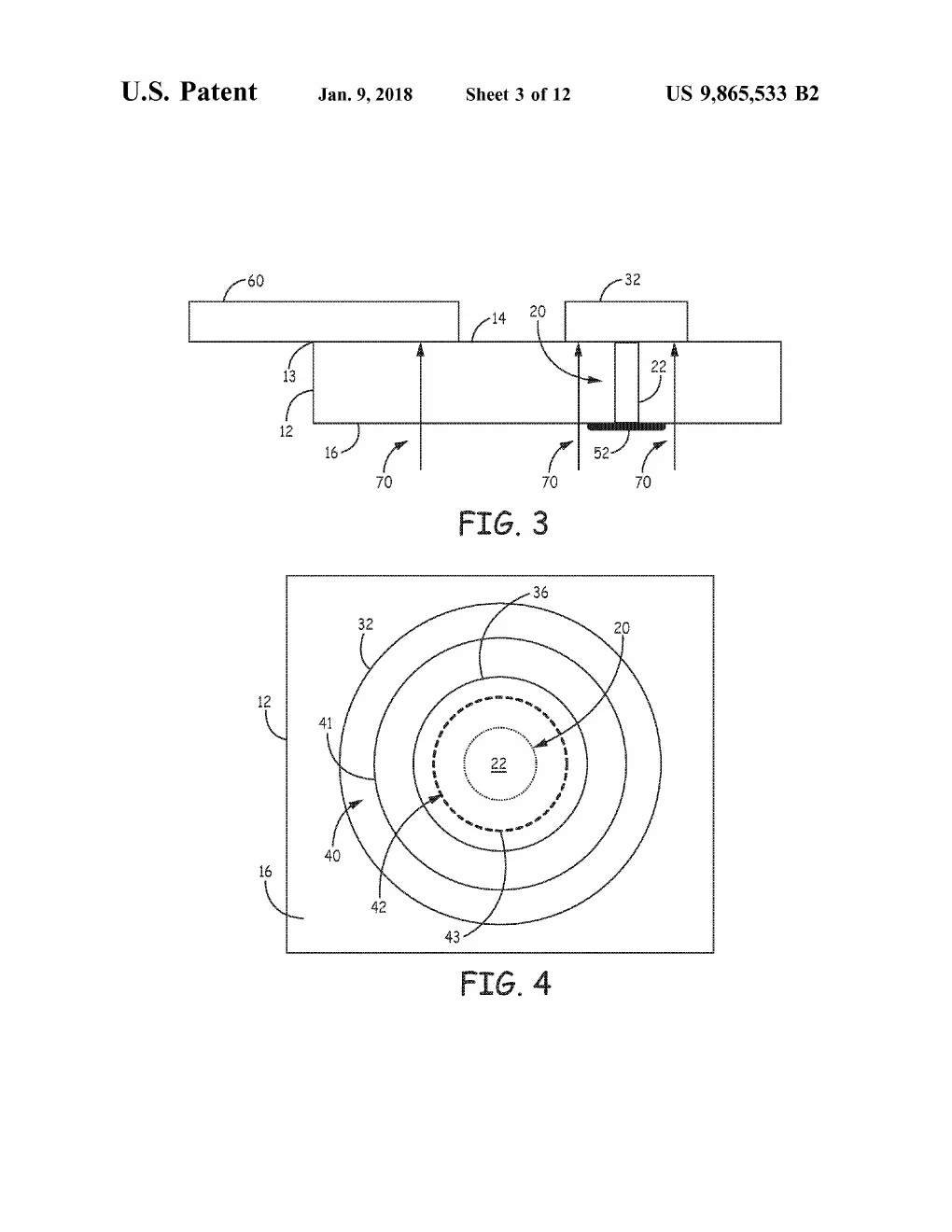
The Feedthrough Line: wiring through an unbroken wall
Wires through an unbroken wall — the furnace braze replaced by a laser bond tens of nanometers thin.
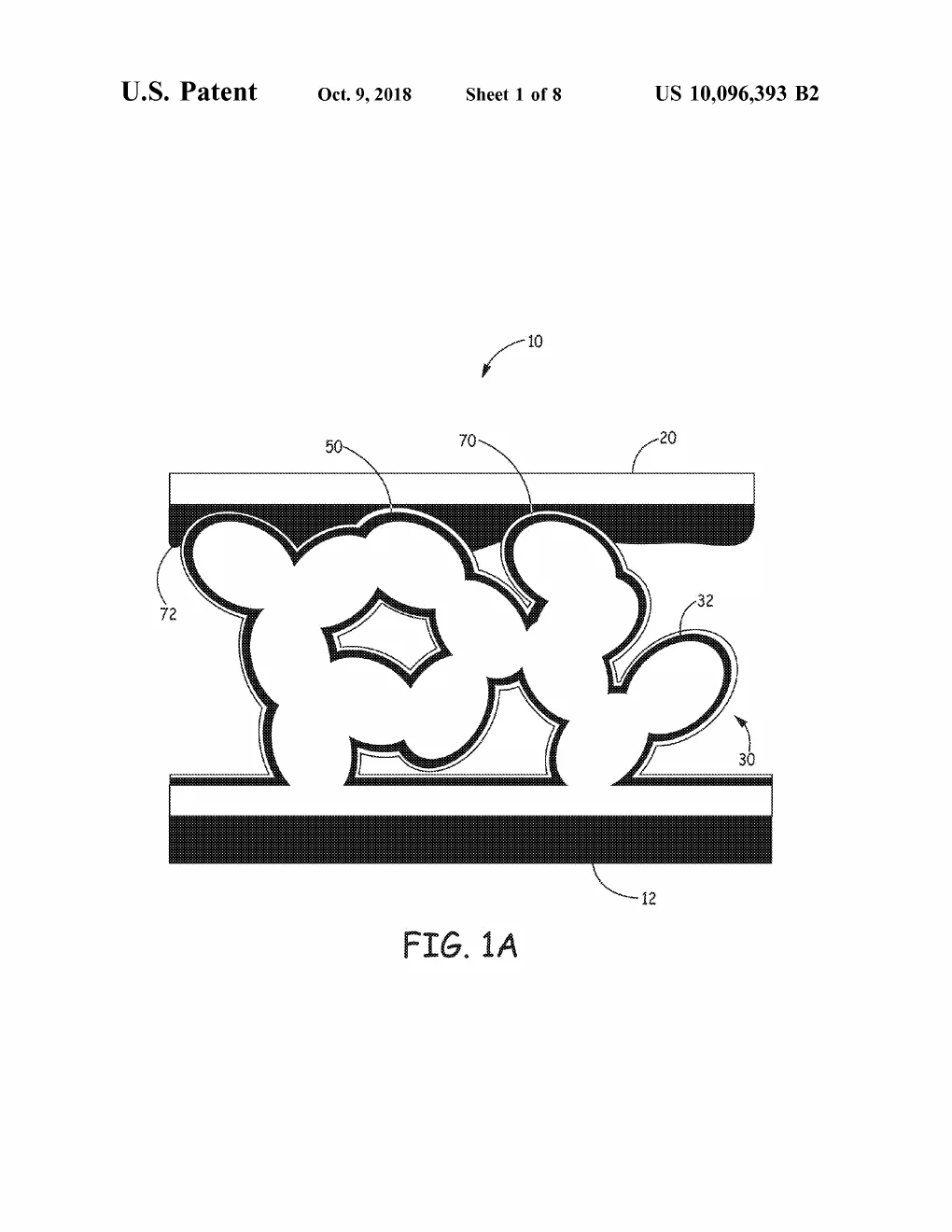
The Nuclear Line: reviving the atomic heartbeat
The atomic heartbeat revived: a three-dimensional sponge that drinks radiation and hands back current.
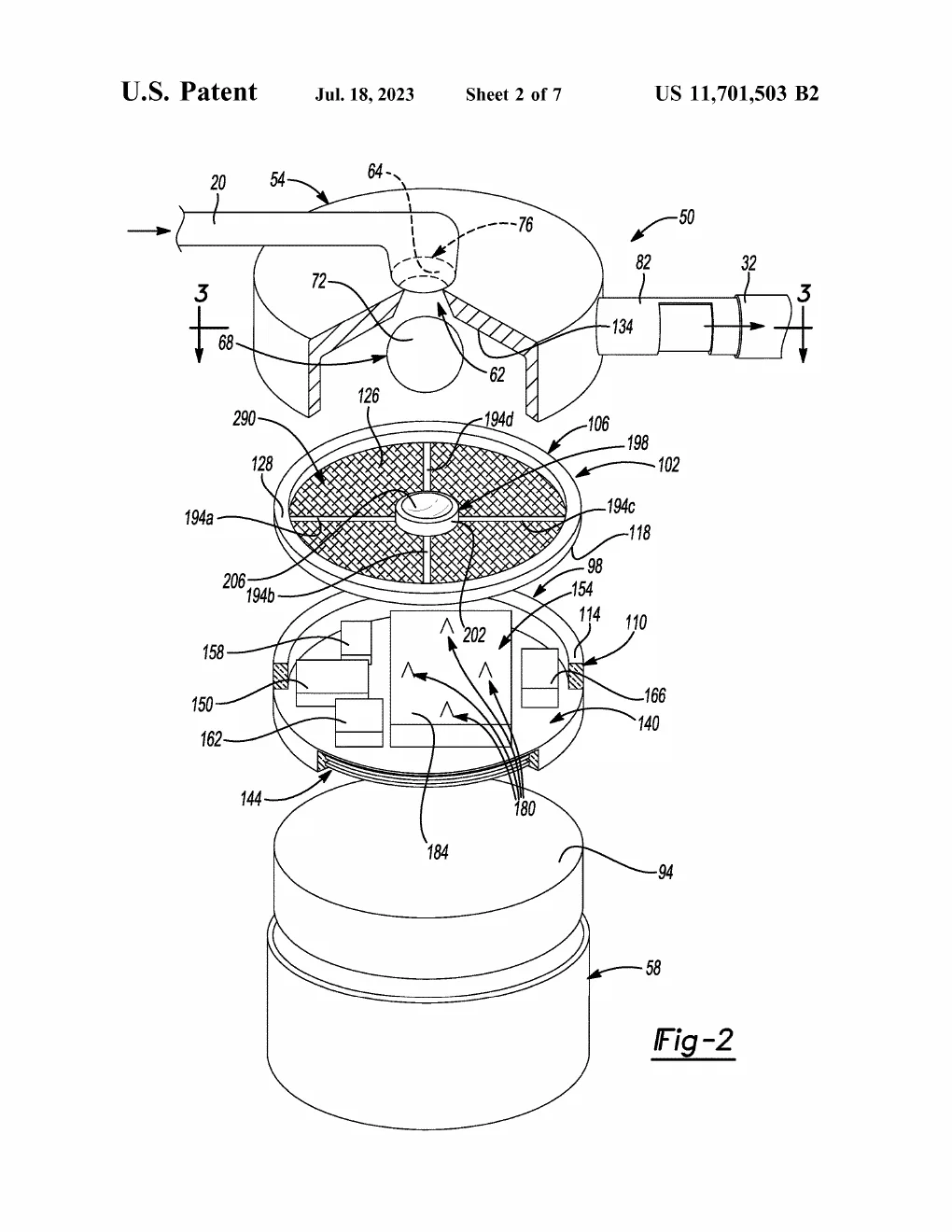
The Valve: engineering mercy for hydrocephalus
A MEMS hinge in the brain’s plumbing — drainage pressure commanded from outside the body.
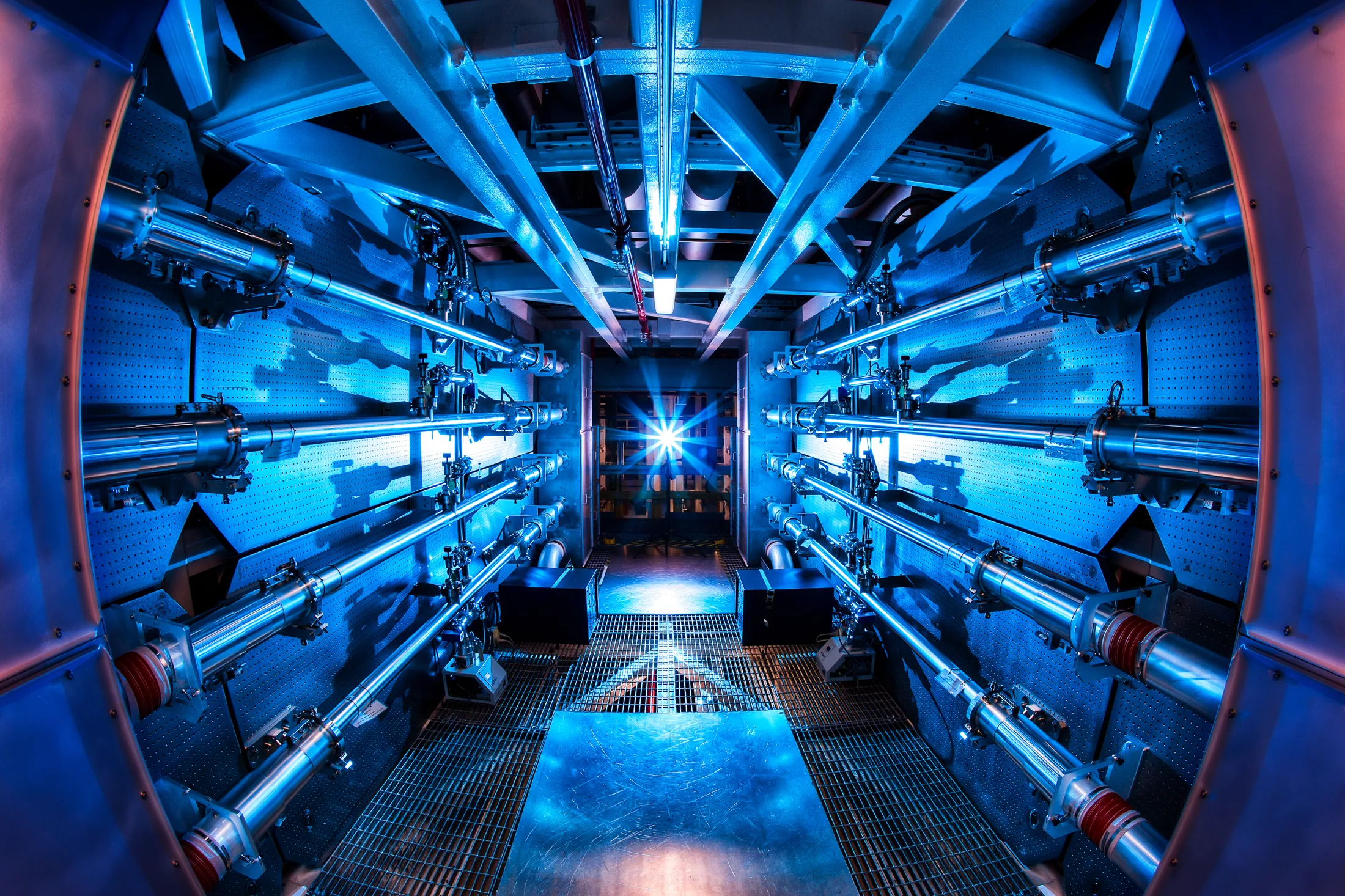
The instrument
Light is the only tool that touches nothing — and joins everything.
A cathedral of laser optics at the National Ignition Facility. The same physics, scaled down five orders of magnitude, seals a pacemaker: energy delivered precisely, through transparent walls, to exactly the joint — the laser craft, Heat III.
Photo: Lawrence Livermore National Laboratory, via Wikimedia Commons, CC BY-SA 3.0
The ledger of heats
Every grant logged — all 61, from the November 1993 filing to the 2026 grants, grouped by line, marked by significance, with the years each fire was lit.